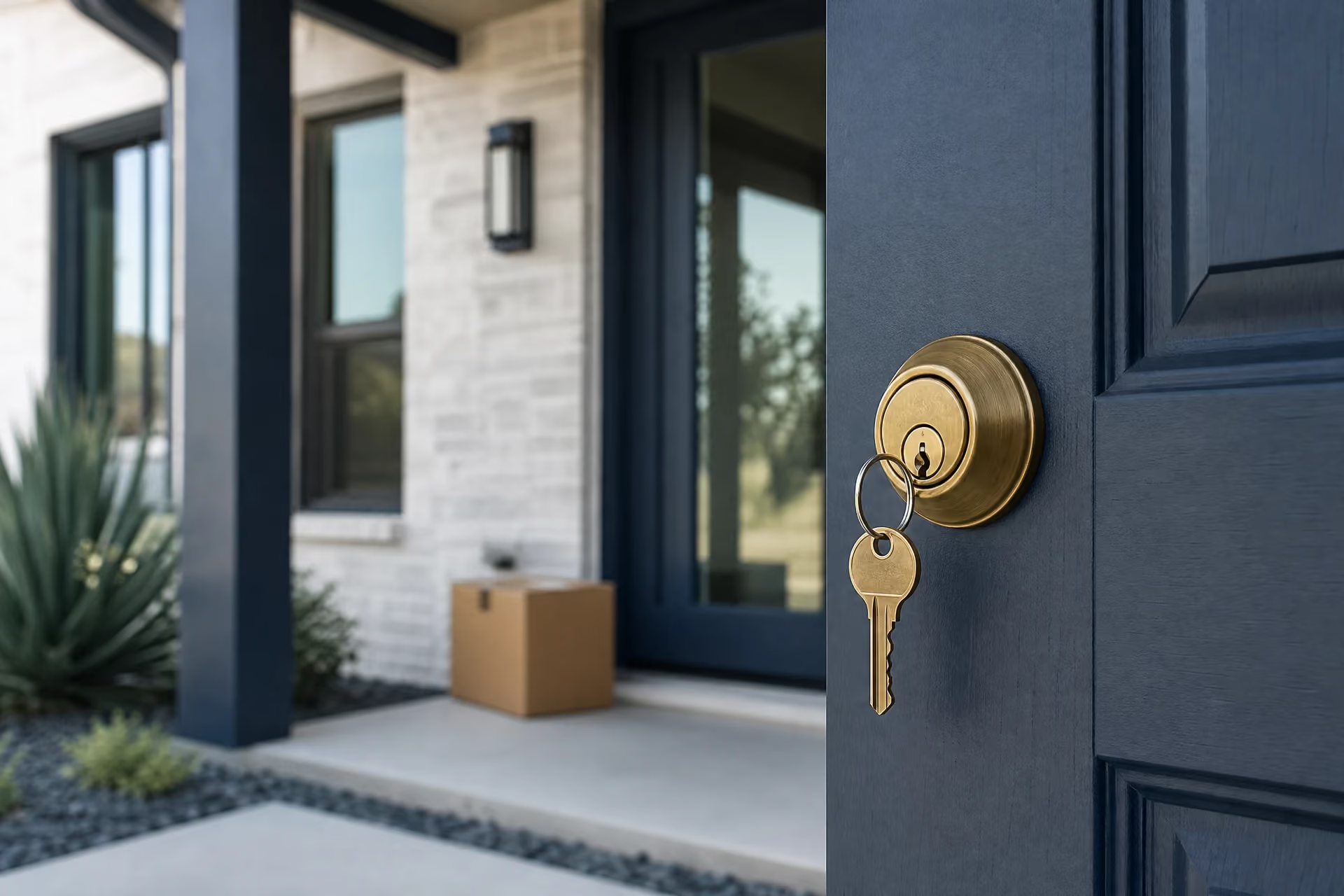
In most cases rekeying is enough. It changes which key opens the lock while keeping the hardware you already have, and it is faster and cheaper than replacement. You need new hardware only when the lock is damaged, worn out, too low a grade to keep, or missing a feature you want. One exception is worth knowing: on a resale home rekeying is almost always the urgent step, and on a brand new build it may already have happened without anyone telling you. Anyone who has just closed on a house in Spring, Klein, The Woodlands or north Houston has a version of the same question. Someone else had keys to this door yesterday. What do I do about that, and what does it cost?
What does rekeying actually do?
Rekeying changes the internal pin configuration inside the lock cylinder so the old key no longer turns it and a new key does. The deadbolt, the knob, the strike plate and the screws all stay where they are. Nothing gets removed from the door.
A pin tumbler cylinder holds a stack of small pins at each key position, and the cuts on a correct key push those stacks to an exact height so the cylinder can rotate. Swap the bottom pins for different heights and the cylinder answers to a different key.
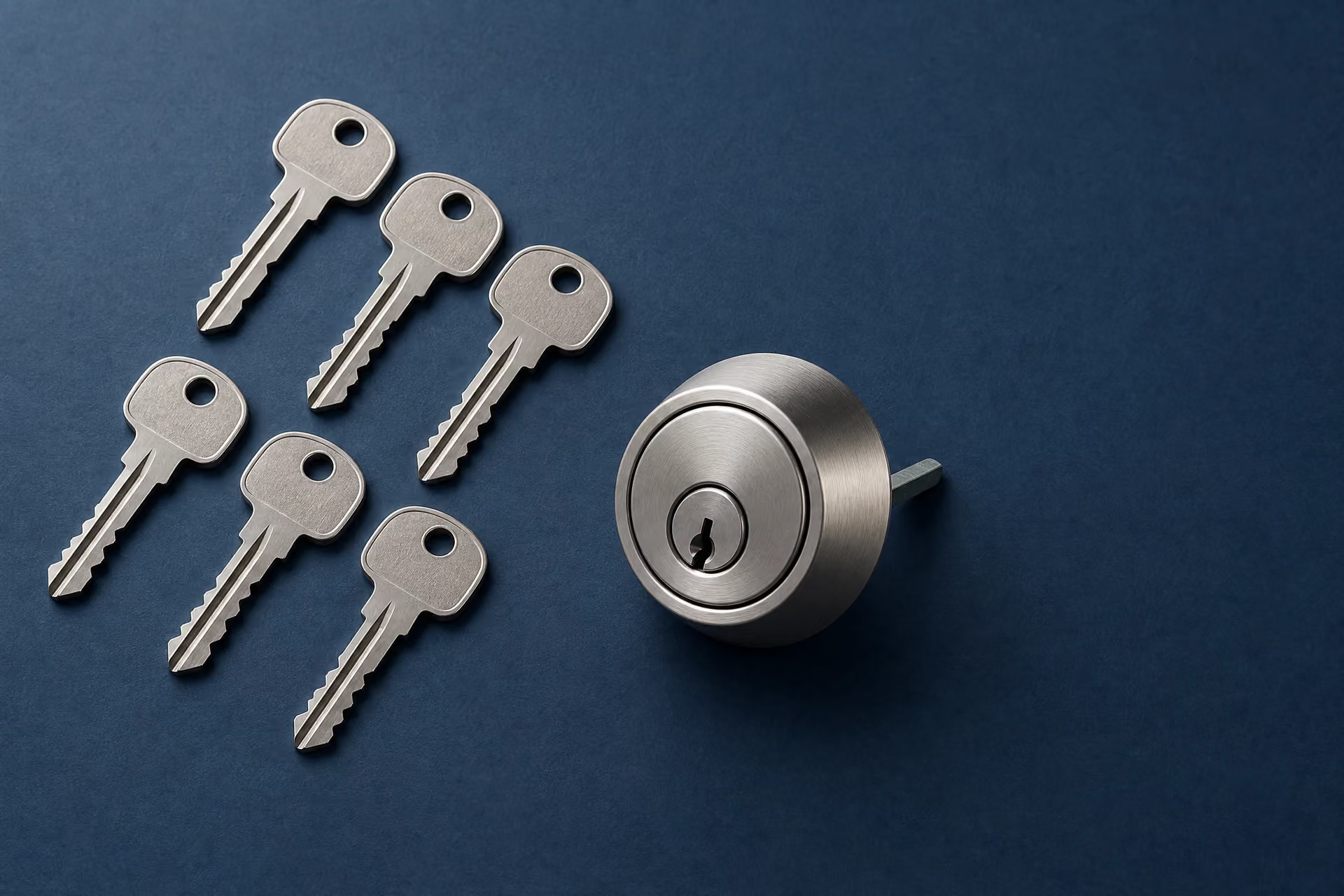
Two things follow. Rekeying is quick, so a house full of exterior doors is usually one visit. And several locks can be keyed alike, which is the part homeowners appreciate more than the security. If your front door, back door, garage entry and side gate each came with their own key, they can be made to open with one.
When is rekeying not enough?
Replace the hardware instead when any of these are true.
The lock is damaged or sticking. A deadbolt that needs lifting, shoving or jiggling is telling you the bolt is binding in a misaligned strike, or the cylinder is worn. Rekeying a failing lock buys a new key and the same failure.
The finish is corroded. Gulf Coast humidity is hard on exterior hardware, and pitting around the keyway usually means moisture has already reached the internals.
It is builder grade and you want better. If your plan is to upgrade anyway, rekeying first is money spent twice.
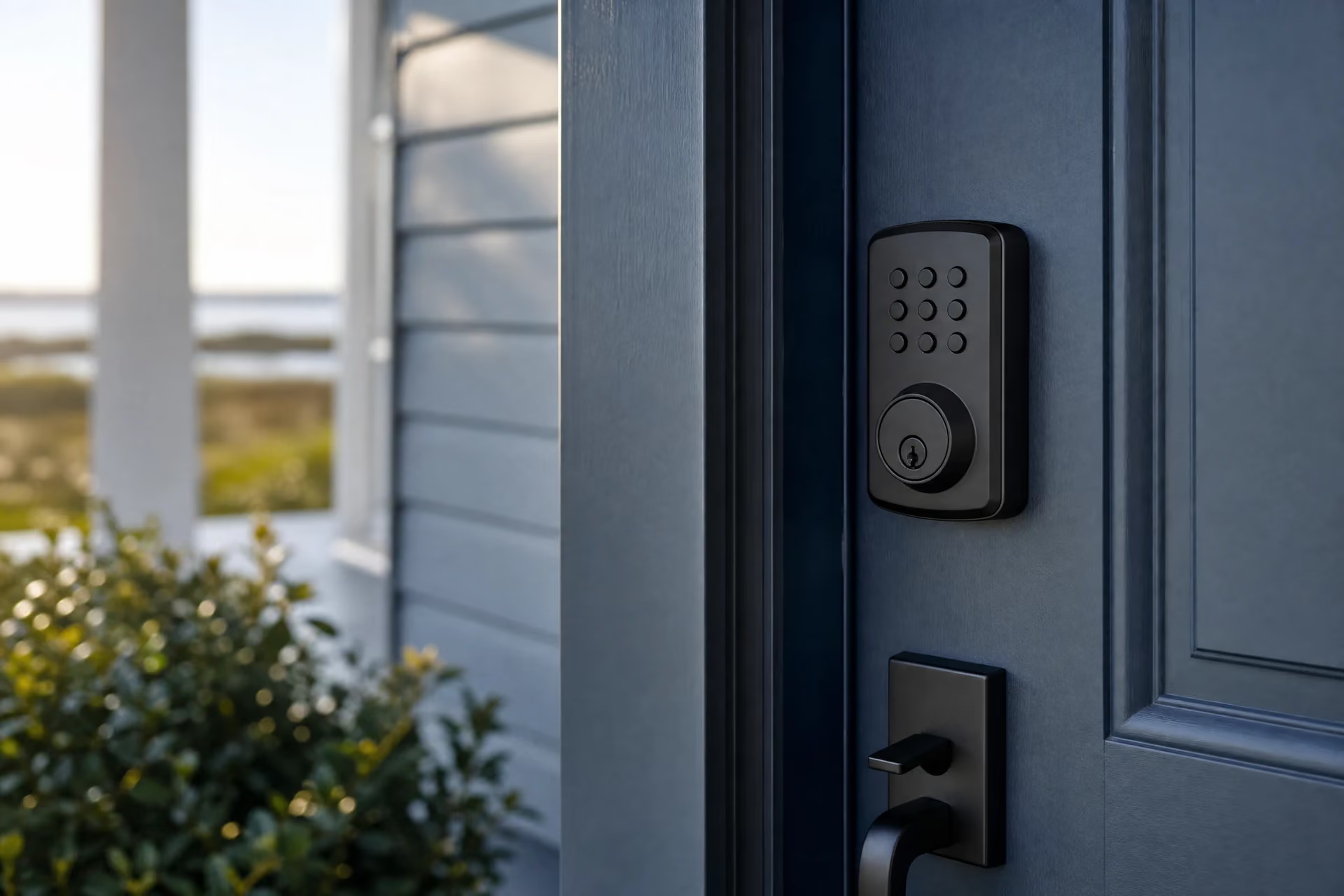
You want a feature the lock does not have. Keypad entry, a smart lock, a thumbturn instead of a double cylinder, a longer bolt throw. None come from rekeying.
The key is stamped "Do Not Duplicate" or belongs to a restricted keyway. These use controlled blanks, so you may need the original supplier or a new cylinder entirely.
- Situation: Just bought a resale home; Rekey: Yes, first priority; Replace: Only if hardware is worn
- Situation: Just closed on a new build; Rekey: Check the builder key question below; Replace: If you are upgrading grade anyway
- Situation: Contractor, cleaner or tenant had a key; Rekey: Yes; Replace: No
- Situation: Deadbolt sticks or needs force; Rekey: No; Replace: Yes
- Situation: Want one key for every exterior door; Rekey: Yes; Replace: No
- Situation: Want a keypad or smart lock; Rekey: No; Replace: Yes
- Situation: Lock is corroded or pitted; Rekey: No; Replace: Yes
- Situation: Lost a single key, everything else fine; Rekey: Yes; Replace: No
The builder key question almost nobody asks
New construction in Harris and Montgomery counties runs on trade access. Framers, electricians, plumbers, drywall crews, painters, flooring installers, punch list crews and cleaners all need in the door across a build that can run months.
Builders handle this two ways.
Some order locks with construction keying built in. These cylinders contain a small extra ball bearing, sometimes called a PK ball or lost ball, sitting in the pin chamber. The contractor key is cut deeper and works while the ball is in place. The first time the homeowner key is turned, the ball is displaced permanently into a side chamber, and from that moment the contractor key is dead. Nobody has to come out and do anything.
Other builders skip the feature and hand over a key that every trade on the job also carried, or that matches a row of houses in the same phase.
From the outside those two scenarios look identical. You get a key at closing either way, and the difference is invisible unless you know what to look for in the cylinder. No builder volunteers "by the way, this is the same key the drywall crew had."
So the advice for a new build is not always rekey or never rekey. It is: find out which one you have. If the locks were construction keyed and you have already turned your key in every exterior door, the contractor key died the first time you did it. If they were not, you are carrying a key with an unknown distribution list.
Why the strike plate matters more than the lock grade
The lock usually is not the weak point. The frame is.
Here is the part that changes what people actually spend money on.
ANSI and BHMA grade door hardware on a 1 to 3 scale, with Grade 1 the highest. Under the bored lock standard, Grade 1 hardware survives at least 800,000 cycles and three escalating sets of impact blows at 60, 90 and 120 foot pounds. Grade 2 is 400,000 cycles and two sets. Grade 3 is 200,000 cycles and one set at 60 foot pounds. Those numbers are real and they matter.
But a forced entry through a residential front door usually does not defeat the lock. It defeats the wood.
The bolt extends into a strike plate, and that strike plate is very often fastened with short screws reaching only the door casing, which is decorative trim nailed to the frame. Under a kick, the trim splits and the whole assembly leaves the jamb with the bolt still extended and the lock still locked. The lock did its job. The wood did not.
The fix is inexpensive and boring: longer screws that pass through the jamb into the structural stud behind it, and a reinforced strike where the framing allows. On a house where someone is about to spend real money on Grade 1 deadbolts, this step comes first, because a Grade 3 deadbolt anchored into framing outperforms a Grade 1 deadbolt anchored into trim.
When you should not call a locksmith at all
Your locks are Kwikset SmartKey and you have the current key and the tool. That system is designed to be rekeyed by the homeowner in under a minute.
You are in an apartment or a rental. Texas law puts rekeying obligations on the landlord, on a deadline, at the landlord's expense between tenants. Ask the property manager first.
You only need spare keys, or the garage remote reset. Duplication does not require a service call, and an opener reset is usually a button on the motor unit.
What actually drives the cost
We do not publish prices, because the honest answer depends on the door in front of us. What moves the number: how many cylinders you have, with a deadbolt and knob on one door counting as two; brand and type, since high security cylinders, mortise locks and obscure hardware take longer than a standard deadbolt; condition, because a seized cylinder may have to come out; time of day; and any strike reinforcement, which is a small add worth doing while the door is open. Keying alike usually adds no labor once we are there.
Ask for the full number before work starts, including the service call and travel. Any locksmith who will not put a quote in writing before touching your door is telling you something.
Frequently asked questions
Does rekeying make my lock less secure?No. Rekeying replaces the bottom pins inside a cylinder that was designed for exactly that. The lock's grade, bolt throw and construction are unchanged. A properly rekeyed lock performs identically to the day it was installed, and it now answers only to your key.
How long does it take to rekey a house?Most homes with four to six exterior cylinders take under an hour on site, assuming the hardware is in working condition. Corroded cylinders, mortise locks or high security hardware take longer. Keying everything alike does not add meaningful time.
Should I rekey a brand new construction home?Find out first whether the builder used construction keyed locks. If they did, the contractor key voided itself the first time you turned your key. If they did not, or nobody can tell you, rekey. The cost of asking is nothing and the cost of guessing wrong is everyone on the jobsite holding a working key.
Can I just change the locks myself?On standard residential hardware, often yes. The parts that go wrong are backset mismatch, bolt throw, strike alignment and screw length into framing rather than trim. If the new deadbolt does not close smoothly without lifting the door, stop and get it aligned rather than forcing it.
Do I need to rekey after a roommate or house cleaner moves on?If they held a key and did not return it, yes. Returned keys are not proof, because keys can be copied at any hardware store for a couple of dollars. Rekeying is the only step that actually invalidates a copy you do not know exists.
Get it handled
Precision Lock & Key of Texas serves Spring, Houston and The Woodlands from 1208 1/2 W. Riley Fuzzel Rd in Spring. Open daily 8 a.m. to 6 p.m., after hours emergency service available.
Call (346) 670-2818 or reach us through plktexas.com and tell us how many doors you have. We will tell you whether you need a rekey, new hardware, or just longer screws.
Precision. Security. Peace of Mind.
Related reading
Related services