Yes, for most homes, and the reason people usually worry about them is the wrong one. Smart locks run on their own batteries, not on household power, so a smart deadbolt keeps working through an outage. Hurricane Beryl knocked out power to more than 2.6 million Texas customers on July 8, 2024, and a smart lock on a Spring front door would have operated that whole week. The real Gulf Coast risks are different: heat and humidity on exterior electronics, batteries that fail quietly, and a door jamb that was never strong enough to justify any lock you put in it. We install a lot of these around Spring, Klein, The Woodlands and north Houston. Here is what actually matters and what does not.
Do smart locks stop working in a power outage?
No, and this is the most common misconception we hear.
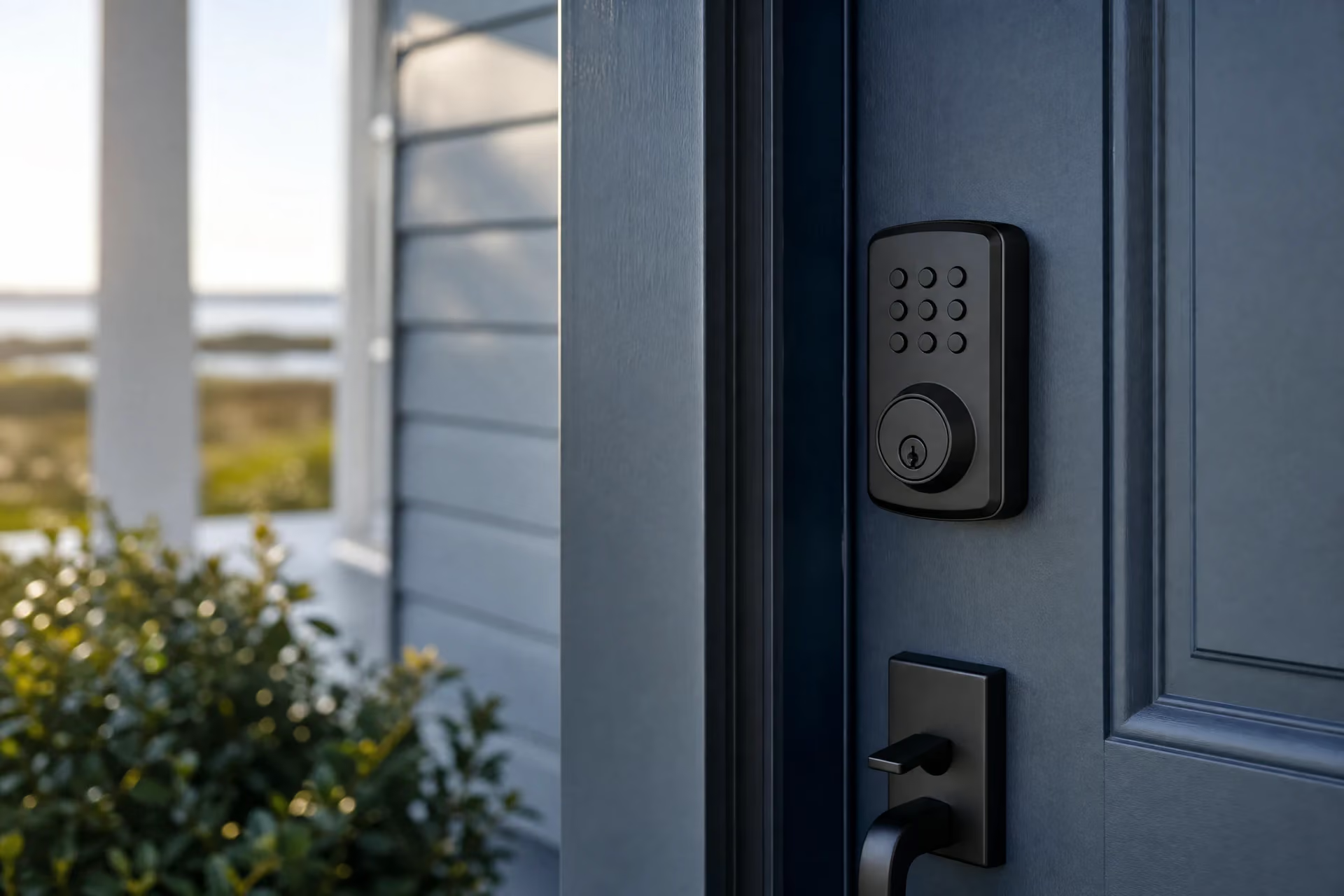
A smart deadbolt is powered by AA or CR123 batteries inside the lock body, on the interior side of the door. Household power has nothing to do with whether the bolt moves. Cut power to the whole neighborhood and the keypad still lights up, the code still works, and the bolt still throws.
What an outage does affect is the features that depend on your internet, not on the lock:
- Remote unlock from your phone while you are away
- Notifications when someone enters
- Voice assistant control
- Integration with a security system
Those need your Wi-Fi router, and your router needs power. Bluetooth control from a phone standing at the door usually still works, because that link is lock to phone and does not pass through the house.
So on a Gulf Coast timeline, the sequence during a storm looks like this. Power goes out, the internet goes out, the remote features go dark, and the lock keeps working on its keypad and its key override for months. That is a livable failure mode, and it is why outages are not the thing to plan around here.
What actually goes wrong with smart locks in Houston
Four things, in rough order of how often we see them.
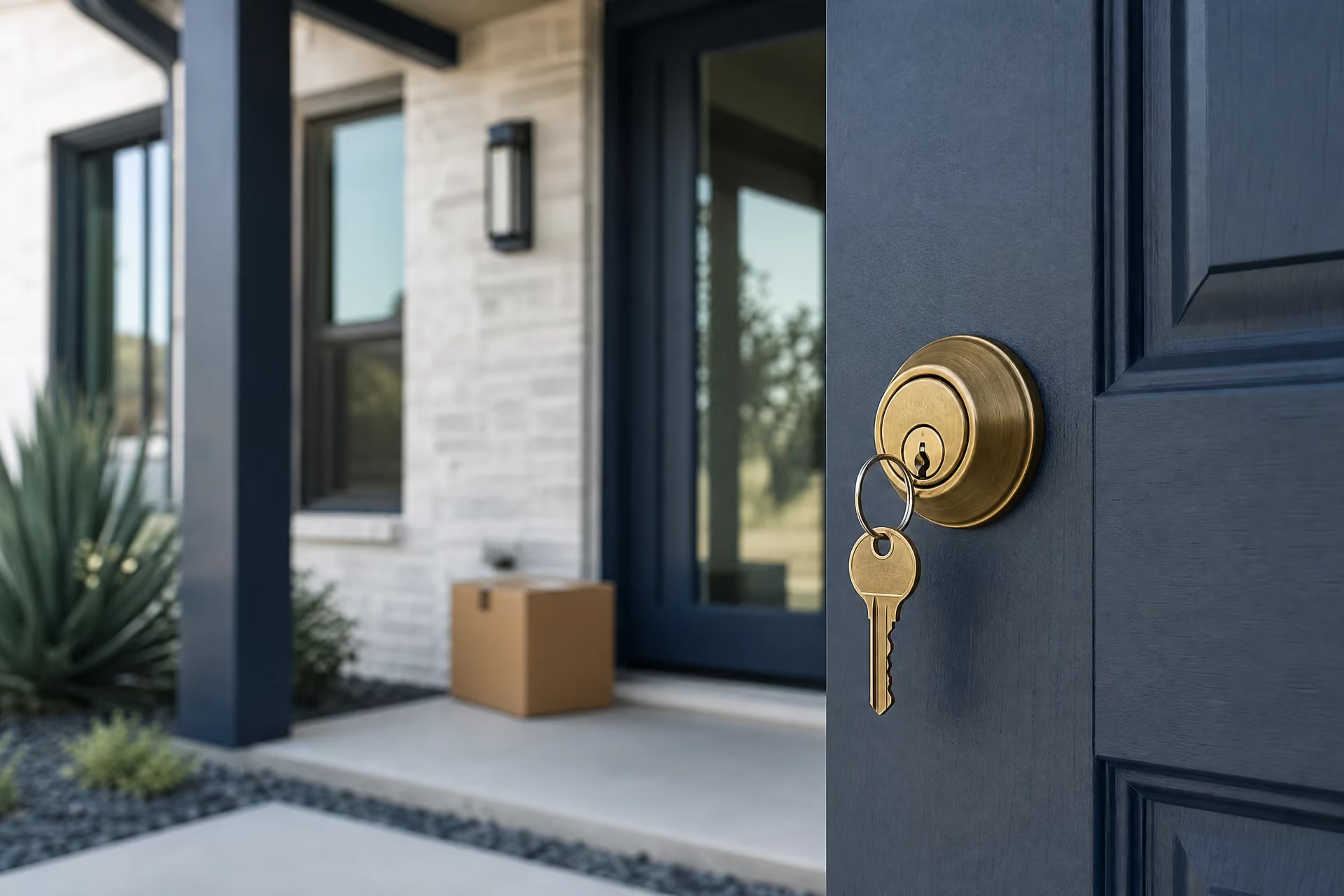
Batteries die at the worst possible time. This is the real outage risk, and it is on a schedule you control. Most smart deadbolts warn for weeks through the app and a chirp at the keypad, and most people ignore both. Replace on a calendar, not on a warning, and keep a physical key off the property. Some models accept a 9 volt battery held against contacts on the exterior escutcheon as an emergency jump, which is worth knowing before you need it.
Exterior keypads take a beating from sun and humidity. A west facing front door in Harris County gets punished. Direct afternoon sun day after day, plus the humidity swing between a 78 degree dewpoint outside and conditioned air inside, works on seals and on the gasket behind the escutcheon. Ask about the weather rating for the specific door rather than the product line. A shaded, recessed entry is a far easier environment than an exposed slab with no overhang.
Worn keypad buttons give away the code. On a keypad used for years with the same four digits, the used buttons wear differently from the unused ones. That does not reveal the order, but it narrows four unknown digits out of ten down to a handful of permutations. Rotate codes, and give the dog walker, the cleaner and the contractor their own.
Alignment problems get blamed on the lock. Houston clay soils shrink and swell with the wet and dry cycle, doors rack in their frames, and a bolt that used to slide into the strike now drags. A mechanical deadbolt just feels stiff. A motorized deadbolt tries, stalls, throws an error and burns batteries doing it. Nine times out of ten the fix is the strike, not the lock.
Does a smart lock make my house more secure?
Partly, and the honest answer requires separating two different things.
Key control gets better. This is the strongest argument. A physical key can be copied at any hardware store for a couple of dollars and you will never know. A code can be issued, restricted to a schedule and deleted from your phone in ten seconds. For a house with a cleaner, a dog walker, a contractor or adult kids coming and going, that beats rekeying every time the arrangement changes.
Physical resistance usually does not get better, and can get worse. Door hardware is graded by ANSI and BHMA on a 1 to 3 scale. Under the bored lock standard, Grade 1 survives at least 800,000 cycles and three escalating sets of impact blows at 60, 90 and 120 foot pounds. Grade 2 is 400,000 cycles and two sets. Grade 3 is 200,000 cycles and a single set at 60 foot pounds.
Plenty of smart deadbolts land at Grade 2 or Grade 3, because electronics, motor and battery compartment share one envelope. Replacing a Grade 1 mechanical deadbolt with a Grade 2 smart lock trades physical resistance for convenience. That may be the right trade. It should be a decision, not a surprise.
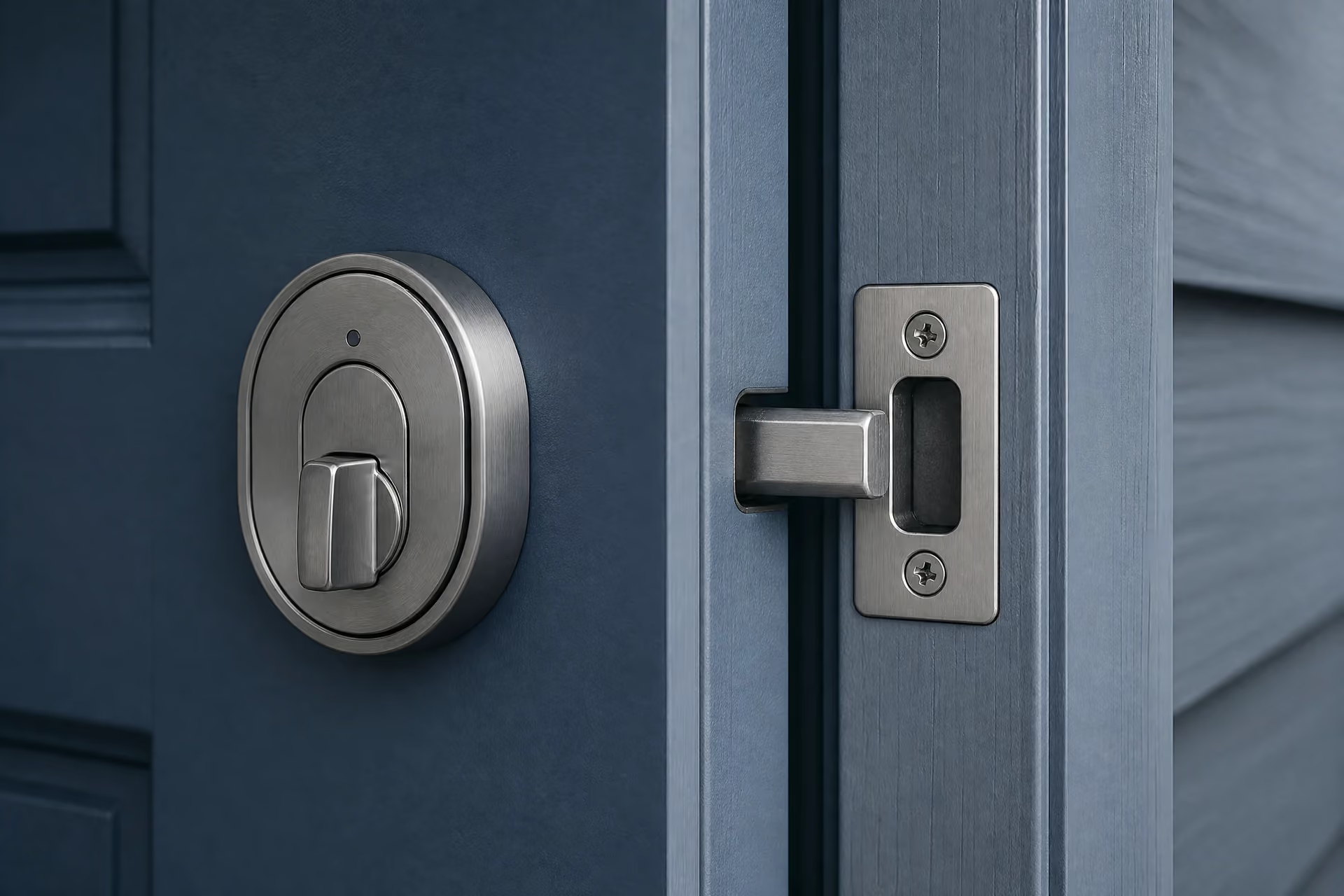
And the hard truth underneath it: a forced entry through a residential front door usually does not defeat the lock, it defeats the wood. The strike plate on most homes is fastened with short screws reaching only the decorative casing rather than the framing behind it. Under a kick, the trim splits and the assembly leaves the jamb with the bolt still extended. Long screws into framing cost almost nothing and do more for your front door than any electronics will.
- Consideration: Works during a power outage; Mechanical deadbolt: Yes; Smart deadbolt: Yes, runs on its own batteries
- Consideration: Remote features during an outage; Mechanical deadbolt: Not applicable; Smart deadbolt: No, needs internet
- Consideration: Give and revoke access; Mechanical deadbolt: Rekey required; Smart deadbolt: Delete a code in seconds
- Consideration: Typical ANSI/BHMA grade available; Mechanical deadbolt: Grade 1 readily available; Smart deadbolt: Often Grade 2 or 3
- Consideration: Ongoing maintenance; Mechanical deadbolt: Essentially none; Smart deadbolt: Batteries, code rotation, updates
- Consideration: Sensitive to door alignment; Mechanical deadbolt: Feels stiff; Smart deadbolt: Stalls, errors, drains batteries
- Consideration: Exterior weather exposure; Mechanical deadbolt: Finish only; Smart deadbolt: Electronics and seals
- Consideration: Failure mode; Mechanical deadbolt: Key still works; Smart deadbolt: Key override, if the model has one
Which homes should skip the smart lock
Fix the door before you motorize it.
We would rather talk someone out of one than install the wrong thing.
If nobody but the household needs access, the feature solves a problem you do not have. The value of a smart lock is managing other people's access. If nobody else ever needs in, a Grade 1 deadbolt and a reinforced strike is a better use of the same money.
If the door does not close cleanly right now, fix that first. Putting a motor on a door that already binds turns a minor annoyance into a lock that fails on a schedule.
If the entry is fully exposed with no overhang and takes direct afternoon sun, weight durability heavily. That is where we push people toward a serious weather rating, or toward an interior mounted retrofit that keeps the electronics off the exterior face and reuses the existing cylinder.
If you are not going to change batteries, do not buy one. That sounds flip. It is the most common reason these end up as service calls.
And if you rent, ask before you change anything. Texas law puts specific security device obligations on the landlord, and swapping hardware without permission can put you on the wrong side of your lease.
What we recommend for a typical Spring or Houston front door
In order: reinforce the strike into framing with longer screws, correct any door alignment problem before smart hardware goes on, choose hardware rated for that door's actual exposure rather than the brochure average, keep a mechanical key override with a copy stored off the property, set unique codes per person and delete them when the relationship ends, and put battery replacement on a recurring calendar reminder instead of waiting for the chirp.
Frequently asked questions
Will my smart lock work if the power goes out in a hurricane?Yes. Smart deadbolts run on their own batteries inside the lock, not on household power, so the keypad and bolt keep working. What stops is anything that needs your internet, including remote unlock from away, notifications and voice control, since the router loses power too.
How long do smart lock batteries last?Commonly six months to a year, depending on how often the door is used, whether Wi-Fi is on continuously, and the outdoor temperature. Heavy use and constant connectivity shorten it. Replace on a calendar rather than waiting for the low battery warning, and keep a physical key off the property.
Does Houston humidity damage smart locks?It can, on exposed doors. The vulnerable parts are the exterior keypad seals and the gasket behind the escutcheon, and a west facing entry with no overhang is the hardest case. Choose hardware rated for that exposure, or use a retrofit that keeps the electronics on the interior side.
Are smart locks as strong as regular deadbolts?Not always. Many smart deadbolts are ANSI/BHMA Grade 2 or Grade 3 because electronics and batteries share the space, while Grade 1 mechanical deadbolts are widely available. Compare grades directly before replacing a Grade 1 lock, and remember that the door jamb is usually the weaker link either way.
Can someone hack my smart lock?Remote attacks on mainstream hardware are rare compared to the ordinary problems: a code shared and never deleted, a code guessed from worn keypad buttons, or a door forced at the jamb. Keep firmware updated, rotate codes, and put your attention on the frame.
Talk it through before you buy
Precision Lock & Key of Texas installs and services smart locks, keypads and access control across Spring, Houston and The Woodlands. We will look at the actual door, the actual exposure and the actual jamb before recommending hardware, and we will tell you when the better answer is a mechanical deadbolt and three inch screws.
Call (346) 670-2818 or reach us through plktexas.com. Open daily 8 a.m. to 6 p.m., after hours emergency service available.
Precision. Security. Peace of Mind.
Related reading
Related services