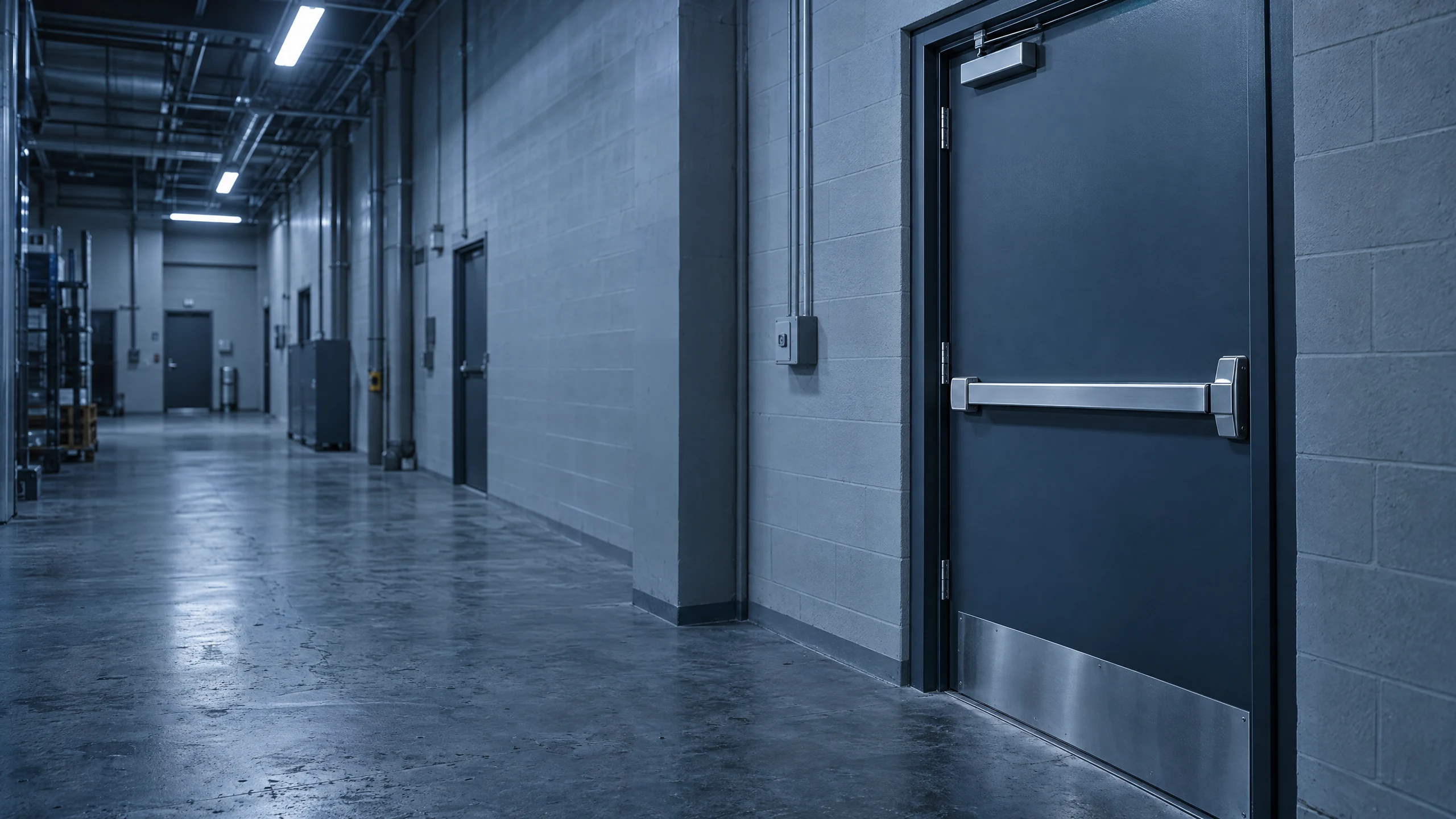
Under the 2021 International Building Code, which Houston enforces, panic hardware is required on latching swinging doors serving a Group H occupancy, and on latching swinging doors serving rooms or spaces with an occupant load of 50 or more in a Group A or E occupancy. That is a narrower list than most people assume. An ordinary office, shop or warehouse does not need a panic bar on occupant load alone. But there is a second trigger that catches buildings constantly: Section 1010.2.9.2 requires panic hardware on the exit or exit access door of rooms containing electrical equipment rated 800 amperes or more with overcurrent, switching or control devices, where that door is less than 25 feet from the equipment working space. We get called both ways on this across Houston: businesses told they need panic hardware when they do not, and businesses with a code-required device on an electrical room who have never heard of the rule.
The occupancy triggers
- Group A assembly: Required on latching swinging doors serving a room or space with occupant load of 50 or more
- Group E educational: Required on latching swinging doors serving a room or space with occupant load of 50 or more
- Group H high hazard: Required
- Groups B, M, and S: Not required by occupant load alone
Classification matters more than the sign on the building. A restaurant inside a retail center is Group A; an office, ordinary shop, or warehouse does not pick up a panic-hardware requirement merely because it is busy.
The electrical-room rule
Section 1010.2.9.2 requires panic hardware on the exit or exit-access door of a room containing electrical equipment rated 800 amperes or more with overcurrent, switching, or control devices when the door is less than 25 feet from the equipment working space. Check main switchgear rooms, house panels, and substantial tenant electrical closets; the ampere rating is on the equipment.
The mistake that is not about panic bars at all
Panic hardware is a life-safety decision, not a one-size-fits-all upgrade.
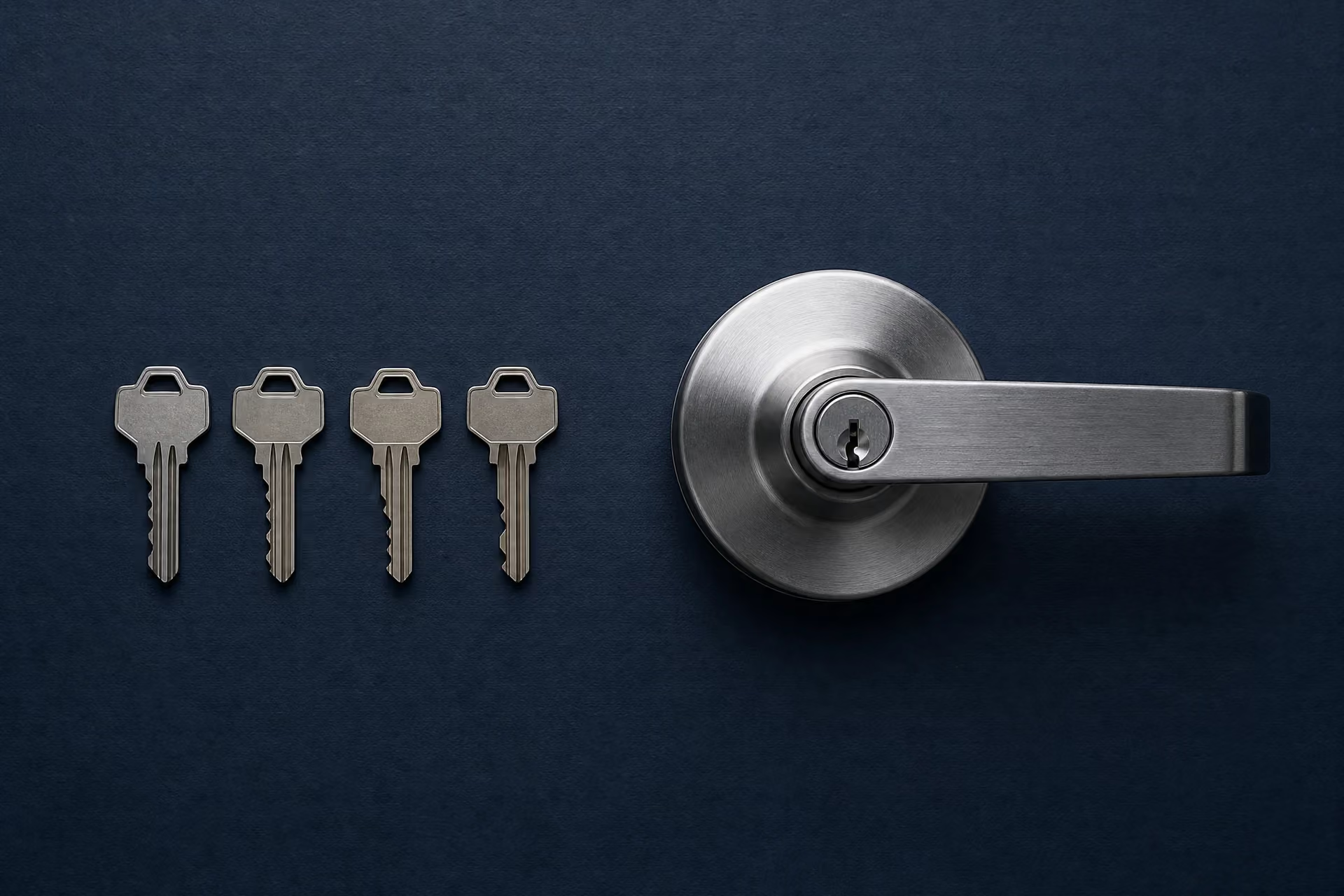
The common small-commercial exit-door violation is a compliant panic bar with a separate deadbolt added above it. Egress doors must be readily openable from the egress side without a key, special knowledge, or effort, and unlatching may require no more than one motion. A panic bar plus a thumbturn deadbolt is two motions.
Panic hardware and fire exit hardware are not the same product
- Fire-rated door: Use fire exit hardware, not ordinary panic hardware.
- Mechanical dogging: Common on panic hardware; not incorporated in fire exit hardware because fire doors must positively latch.
- Device label: The label identifies whether the device is Panic Hardware or Fire Exit Hardware.
When you should not install a panic bar
If code does not require it and the door is not an egress problem, do not buy one. A panic bar adds cost and can create a security gap if it is dogged during the day.
If the door is aluminum storefront, fit the device to the stile. Narrow-stile doors require specific devices. If a rear door is being propped open, consider an alarmed exit device or exterior-side access control with free egress inside.
Frequently asked questions
Does my restaurant need panic hardware? Often, if it is Group A and the door serves a room or space with an occupant load of 50 or more. The code official determines classification and occupant load.
Does an office or warehouse need a panic bar? Not by occupant load alone under the 2021 IBC, but the electrical-room rule or a hazardous-materials classification can create a requirement.
Can I put a deadbolt above my panic bar? No. It creates a second unlatching motion. Use hardware designed to secure the exterior side while preserving free egress.
Have the doors looked at
Precision Lock & Key of Texas installs, repairs, and replaces exit devices and commercial door hardware across Houston, Spring, and The Woodlands. Call (346) 670-2818 or reach us through plktexas.com.
Code references are general information. Occupancy classification, occupant load, and code application are determined by the authority having jurisdiction for a specific building.
Related reading
Related services
Sources
2021 International Building Code, Section 1010.2.9 and 2021 Houston Fire Code, Chapter 10.