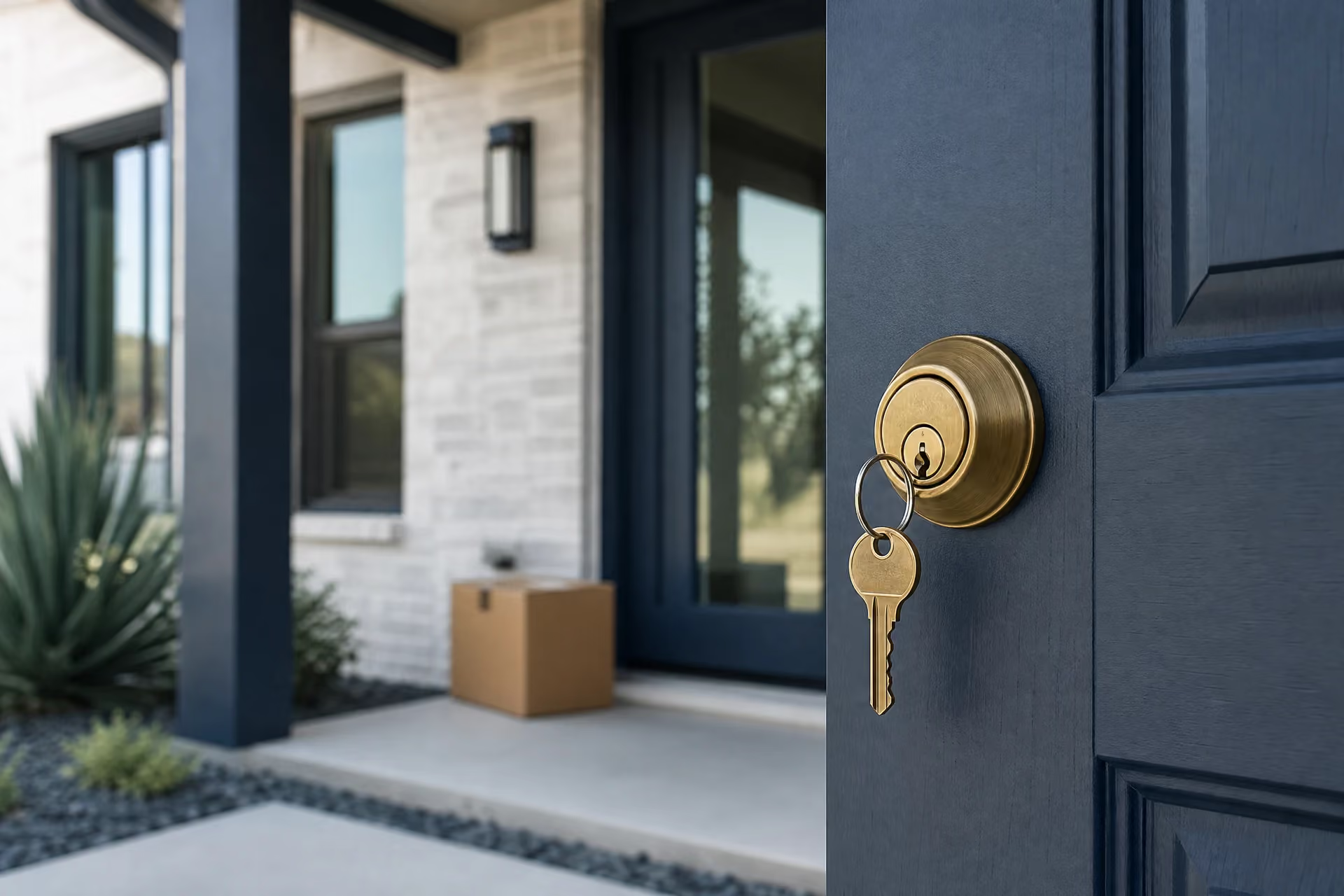
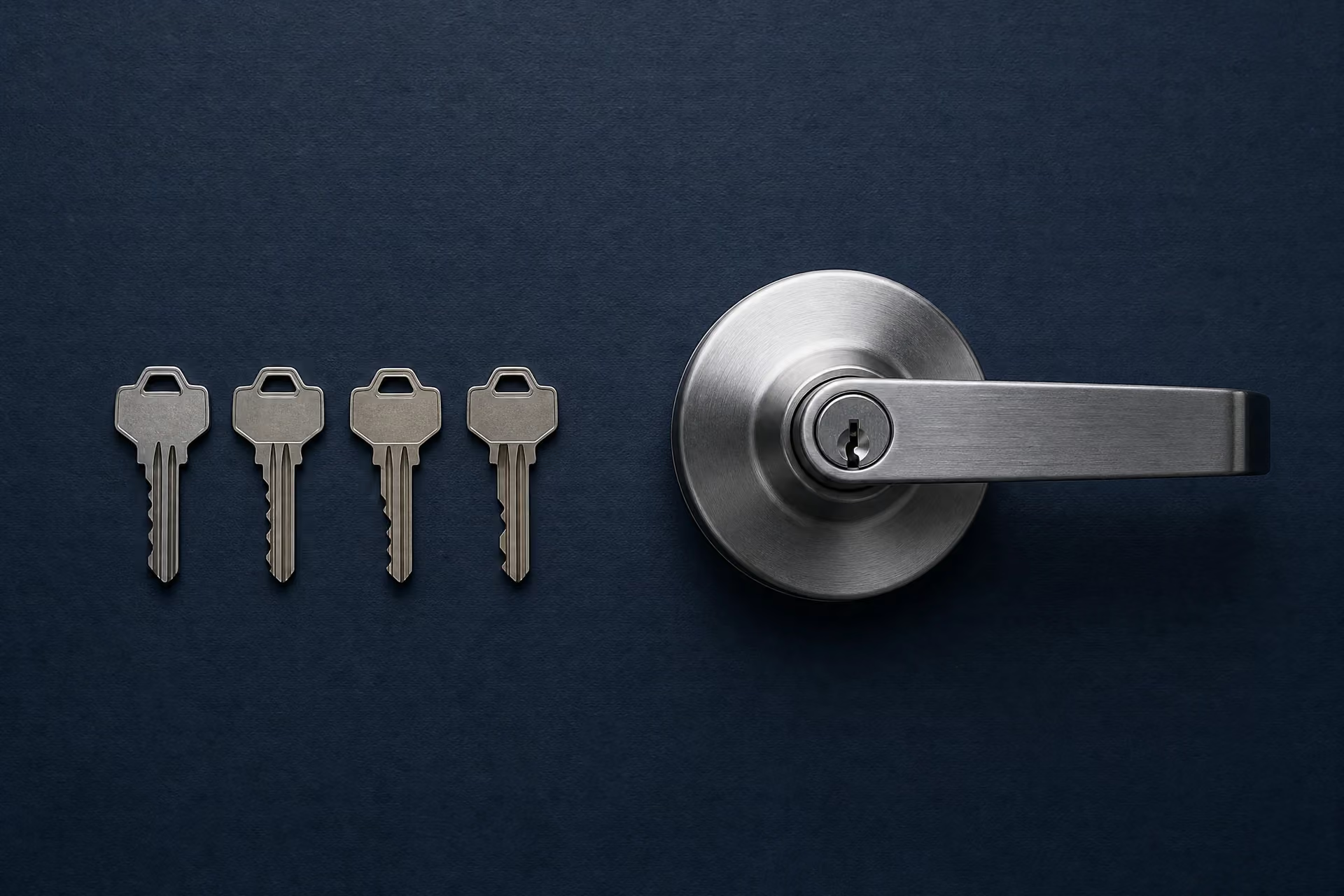
Texas requires a residential landlord to rekey between tenants within seven days, at the landlord's expense. There is no equivalent for commercial space. Chapter 93 of the Texas Property Code governs commercial tenancies and contains no statutory rekeying obligation or security device requirement. Key control at commercial turnover should be addressed in the lease, because the statute does not supply a default rekey rule. Chapter 93 does regulate one thing landlords get wrong constantly, and that is locking a tenant out. We handle turnover work for office, flex and retail landlords across Houston, from Greenspoint and the Energy Corridor out to Spring, Conroe and Tomball. This is the gap almost every portfolio has.
What Texas law does and does not require
Chapter 92 Subchapter D is the residential regime. It requires specific security devices and rekeying between tenants within seven days at the landlord's expense. Chapter 93 governs commercial tenancies and does not impose a statutory rekeying duty or security-device standard.
- Residential turnover rekey: Required by Chapter 92; landlord pays
- Commercial turnover rekey: No default statutory duty under Chapter 93
- Commercial key control: Should be addressed in the lease and operating process
- Commercial lockouts: Chapter 93 permits a delinquent-tenant lockout only with stated conditions
With no statutory default, the durable commercial answer is a lease clause that says who rekeys at turnover, who pays, what the deadline is, and who controls the master key.
Key control after turnover
Tie rekeys to the turnover date rather than build-out completion. Keep a dated key log. Use restricted keyways for masters and submasters so controlled blanks cannot be quietly duplicated. If a building master opens every suite and turnover is constant, a planned master-key redesign or access control may be better than rekeying reactively.
Why this creates real exposure
Commercial turnover is the time to make key control deliberate, documented, and current.
Without a turnover process, prior tenants, departed employees, vendors, brokers, contractors, and cleaners may all retain keys. The risk becomes visible after a loss with no forced entry, when a master key goes missing, or when a security-sensitive new tenant asks about key control.
Locking a tenant out: read this before you call anyone
Section 93.002 allows a landlord to change the locks of a commercial tenant delinquent in rent only with conditions. Written notice must be posted on the tenant's front door with the name and address or telephone number of the person or company from which a new key may be obtained. The new key must be provided during the tenant's regular business hours if the tenant pays the delinquent rent.
Section 93.002(g) sets remedies for a faulty lockout, including possession or lease termination, actual damages, one month's rent or $500 whichever is greater, reasonable attorney's fees, and court costs, less delinquent rents. Section 93.003 provides the court reentry process.
Frequently asked questions
Does Texas require a commercial landlord to rekey between tenants? No statutory rekey duty appears in Chapter 93. Check the lease for a contractual requirement.
Can a commercial landlord lock out a tenant for unpaid rent? Yes, subject to the Chapter 93 notice and key-access conditions.
Who should pay for a turnover rekey? The lease should answer that. Many landlords absorb it as a turnover cost to protect the asset and support leasing.
Put turnover key control on a schedule
Precision Lock & Key of Texas handles commercial turnover rekeys, master-key system design, restricted key systems, and access control for Houston-area landlords and property managers. Call (346) 670-2818 or reach us through plktexas.com.
This article summarizes Texas Property Code provisions for general information and is not legal advice. Consult a Texas attorney about a specific lease, property, or dispute.
Related reading
Related services
Sources
Texas Property Code, Chapter 93 and Texas Property Code, Chapter 92.