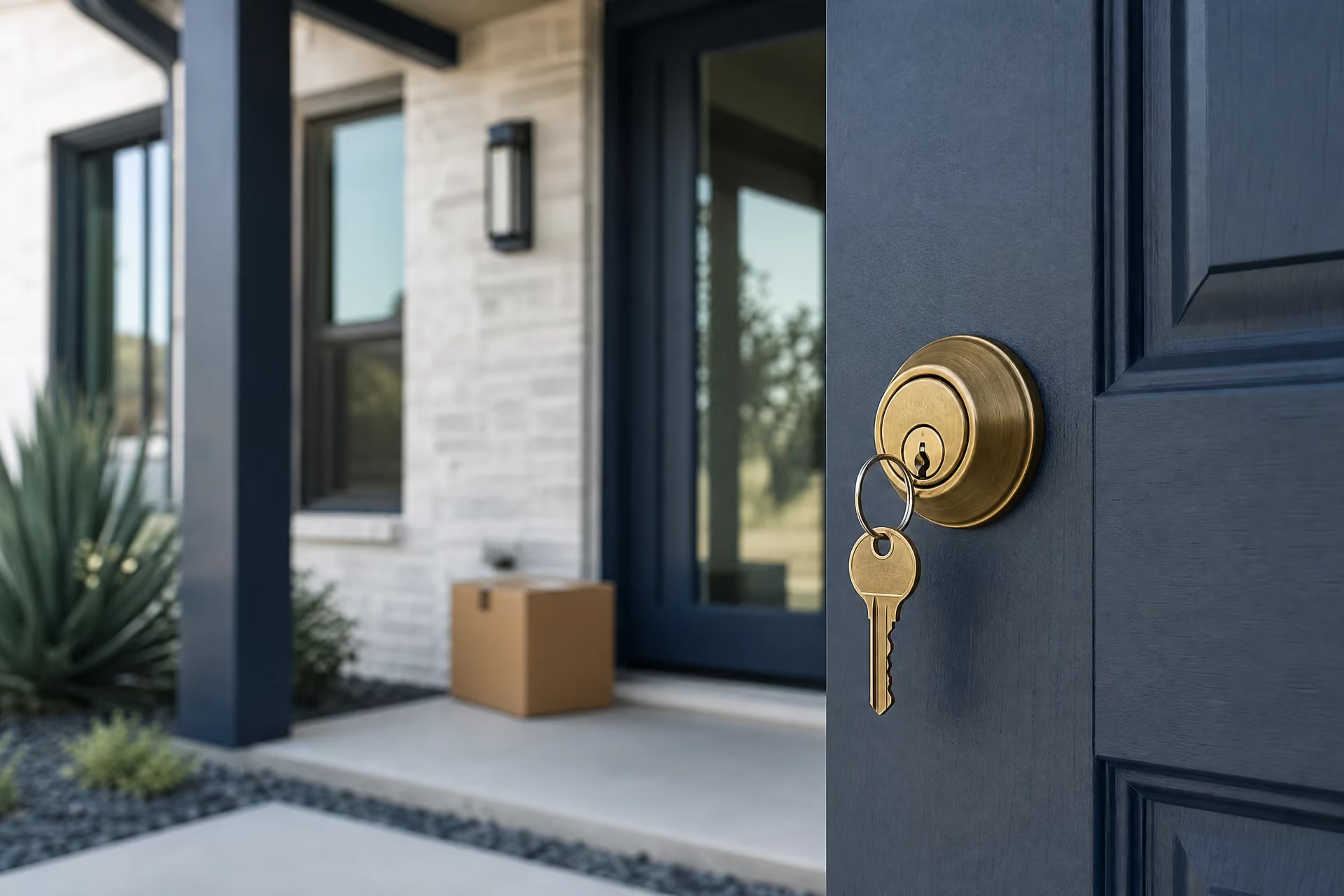
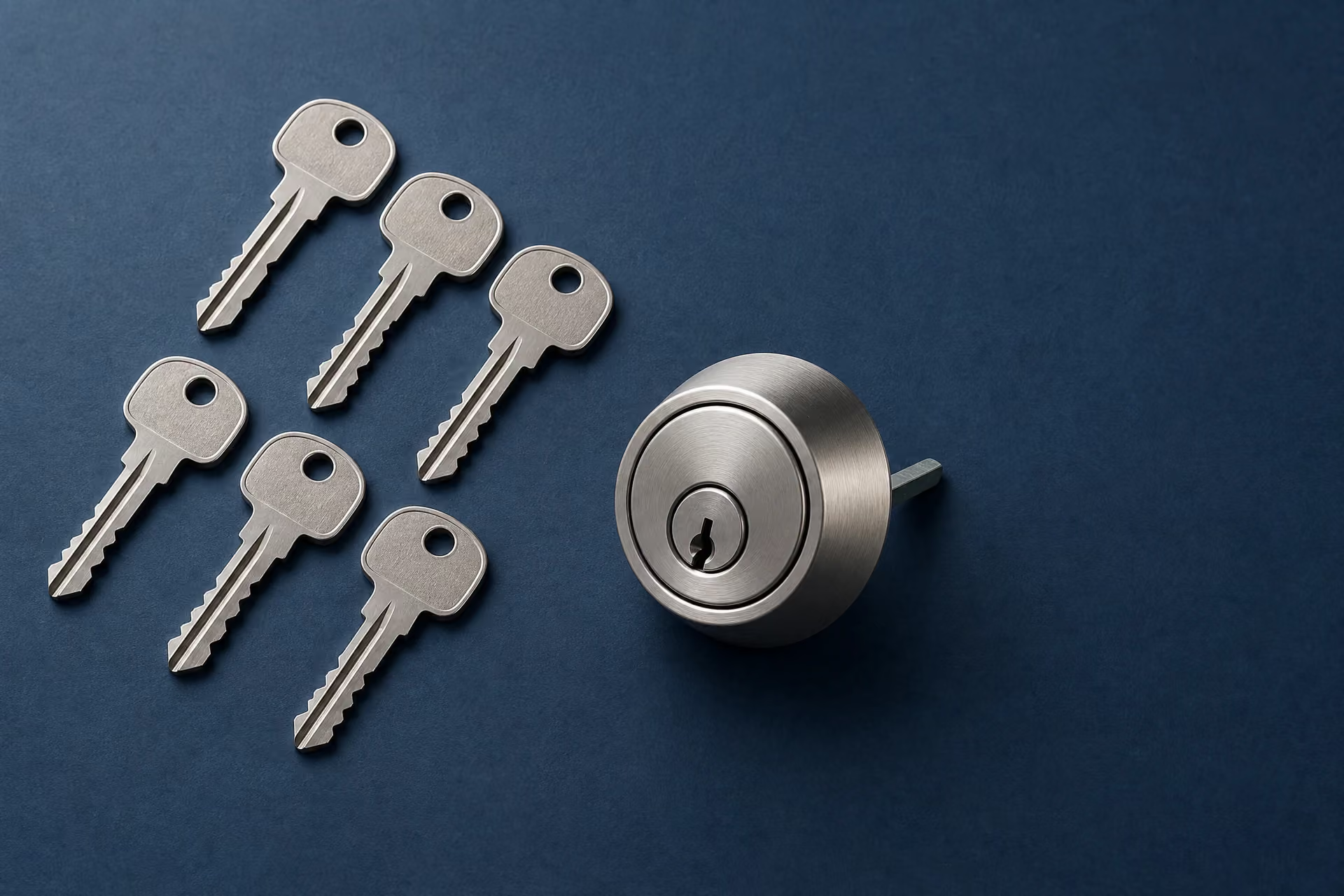
For most new homeowners, rekeying is the practical first move. It changes the pins inside your existing locks so old keys stop working without replacing good hardware. Replace only when locks are worn, low grade, damaged, mismatched, or when you want a meaningful security or smart-lock upgrade.
Why rekey after closing?
You cannot know how many copies of a home’s keys exist. On a resale, access may have passed through sellers, prior owners, agents, contractors, cleaners, neighbors, pet sitters, or former tenants. On new construction, trades and sales staff may have had practical access during the build. Rekeying turns that unknown access history into a known one.
Rekeying and replacing solve different problems
- Rekeying: Changes the pins inside an otherwise sound cylinder, stops old keys from working, preserves the look of the hardware, and is typically the lower-cost option.
- Replacing: Changes the entire lock, including exterior and interior hardware, and lets you move to a different finish, grade, deadbolt, or smart-lock setup.
- Keying alike: During either service, compatible locks can often be set to one key so the front, back, garage service door, and gate do not require separate keys.
When replacement is the better choice
- The lock is worn: If a key needs to be lifted, jiggled, or forced, rekeying does not solve the underlying wear or alignment issue.
- The exterior hardware is low grade or damaged: Upgrading a weak or corroded deadbolt can improve the overall opening, not just the key control.
- There is no deadbolt: An exterior door needs more than a knob or lever latch; ask about a properly installed deadbolt and reinforced strike.
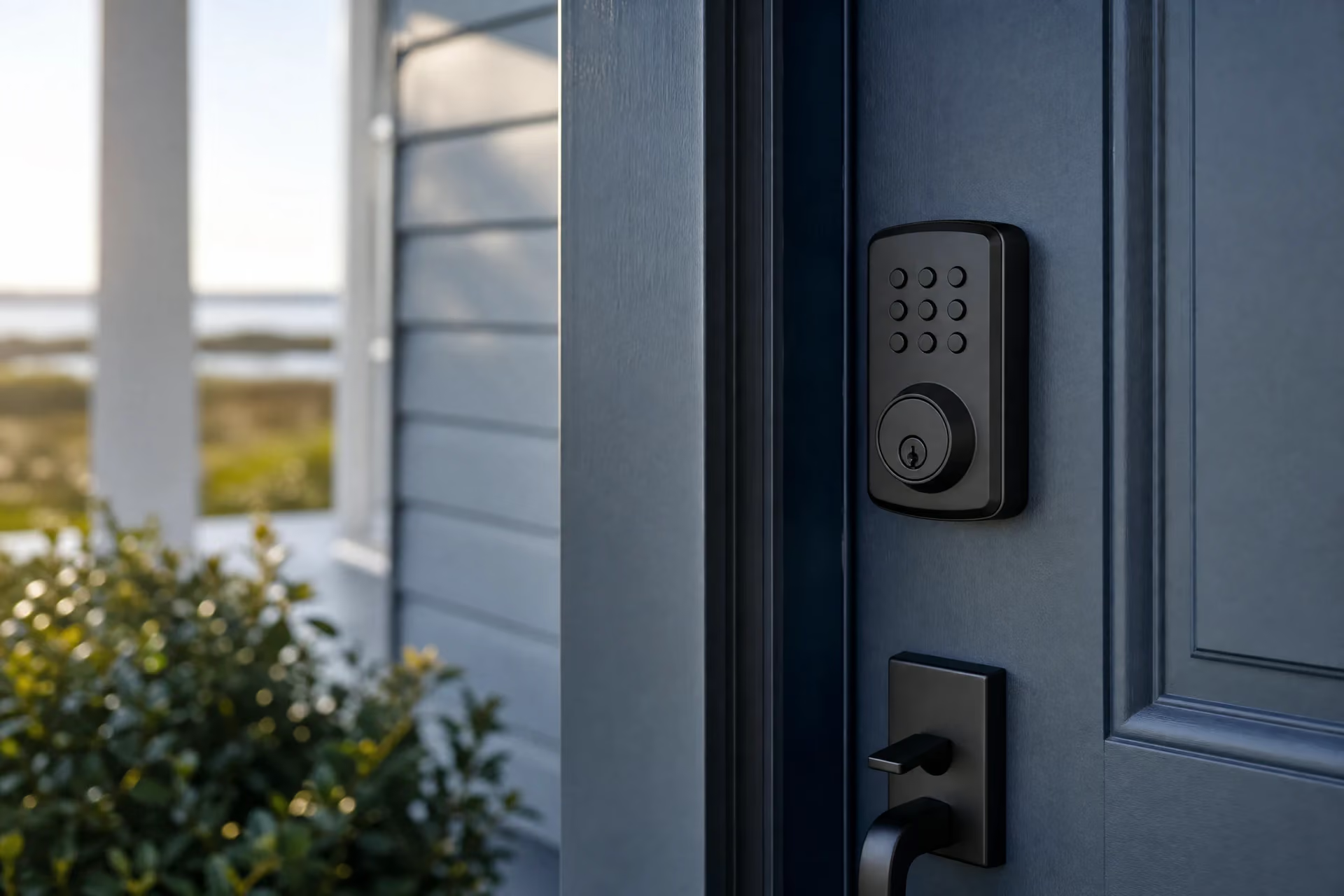
- You want a smart lock or keypad: A new smart deadbolt is a hardware replacement, though its physical cylinder may often be keyed to match the rest of the house.
The doors and access points new owners forget
Walk the property before an appointment and count every opening that has a key, code, or account attached to it.
- The garage service door and side entry into the garage.
- Backyard gates, detached shops, pool houses, barns, and storage rooms.
- Mailboxes and interior offices or storage rooms.
- Garage-door opener codes and exterior keypads.
- Alarm codes, smart-doorbell accounts, and any connected-device administrator access.
Digital access is a key too—it just does not hang from a key ring.
When rekeying can wait
If you know the sellers personally, can account for every key, and the existing hardware is in good condition, a normal weekday appointment may be reasonable. If a new door or entry renovation is already planned, coordinate the hardware decision so you do not pay for the same work twice.
Frequently asked questions
How long does it take? A typical home with four to six exterior openings can often be rekeyed in one visit; gates, outbuildings, and mailboxes add time.
Can I rekey locks myself? Some brands sell homeowner kits, but kits are brand-specific and usually cannot put mixed lock brands onto one key. A dropped pin or incompatible cylinder can quickly turn the project into a service call.
Should a rental be rekeyed between tenants? Yes. Rekeying at turnover is an economical way to restore control before a new resident moves in.
Next steps
If a recent move included a lost key, start with our house-lockout checklist. If you are considering a keypad or connected option, read our Gulf Coast smart-lock guide. Explore residential locksmith services or request a rekeying appointment with Precision Lock & Key.